
When a boat air conditioner runs but the cabin stays warm, the symptom does not point to one automatic answer. Marine systems depend on several things happening together: steady electrical power, clean air movement, reliable seawater flow, correct control settings and a refrigeration circuit that can move heat.
The fastest path to a useful diagnosis is to separate what you can observe safely from what requires instruments and marine HVAC experience. That avoids guessing, repeated resets and parts changes that do not address the cause.
Start with the symptom, not a theory
Notice exactly what the system is doing. Does the display power on? Does the blower move air? Is there normal discharge flow while the unit operates? Does the unit cool for a few minutes and then stop? An intermittent problem often tells a different story than a system that never starts.
Also note whether one cabin is affected or every zone aboard. A single-zone issue can narrow attention to that air handler, controller or duct path. Multiple zones failing at once can point toward the electrical supply, controls or another shared climate-system component.
Safe observations you can make at the dock
- Confirm that shore power or generator power is stable and that the correct breakers are on.
- Read and photograph any fault code before resetting the control.
- Check whether the return-air grille is blocked by luggage, bedding or stored gear.
- Inspect the accessible air filter and follow the equipment maker's cleaning or replacement directions.
- Look for a normal, steady stream at the seawater discharge while the cooling system is operating.
- Note unusual sounds, vibration, odors or water where it should not be.
Common reasons a marine AC loses cooling
Restricted seawater flow
Marine air conditioning typically rejects heat through a dedicated seawater loop. A weak or missing discharge stream is useful evidence, but it does not prove which component is responsible. Knot Hot evaluates the air-conditioning system and its operating response; conditions outside that equipment may require the appropriate marine trade.
Restricted cabin airflow
A dirty filter, blocked return, collapsed duct or obstructed supply grille can make a healthy refrigeration circuit feel ineffective. Poor airflow may also contribute to coil icing. If airflow begins strong and fades as ice develops, shut the system down and let a technician identify why the coil is getting too cold.
Control or sensor trouble
A temperature sensor in the wrong location, a loose connection or a controller fault can cause short cycling or inaccurate readings. Record the setpoint and displayed cabin temperature along with the actual cabin conditions.
Refrigeration or component faults
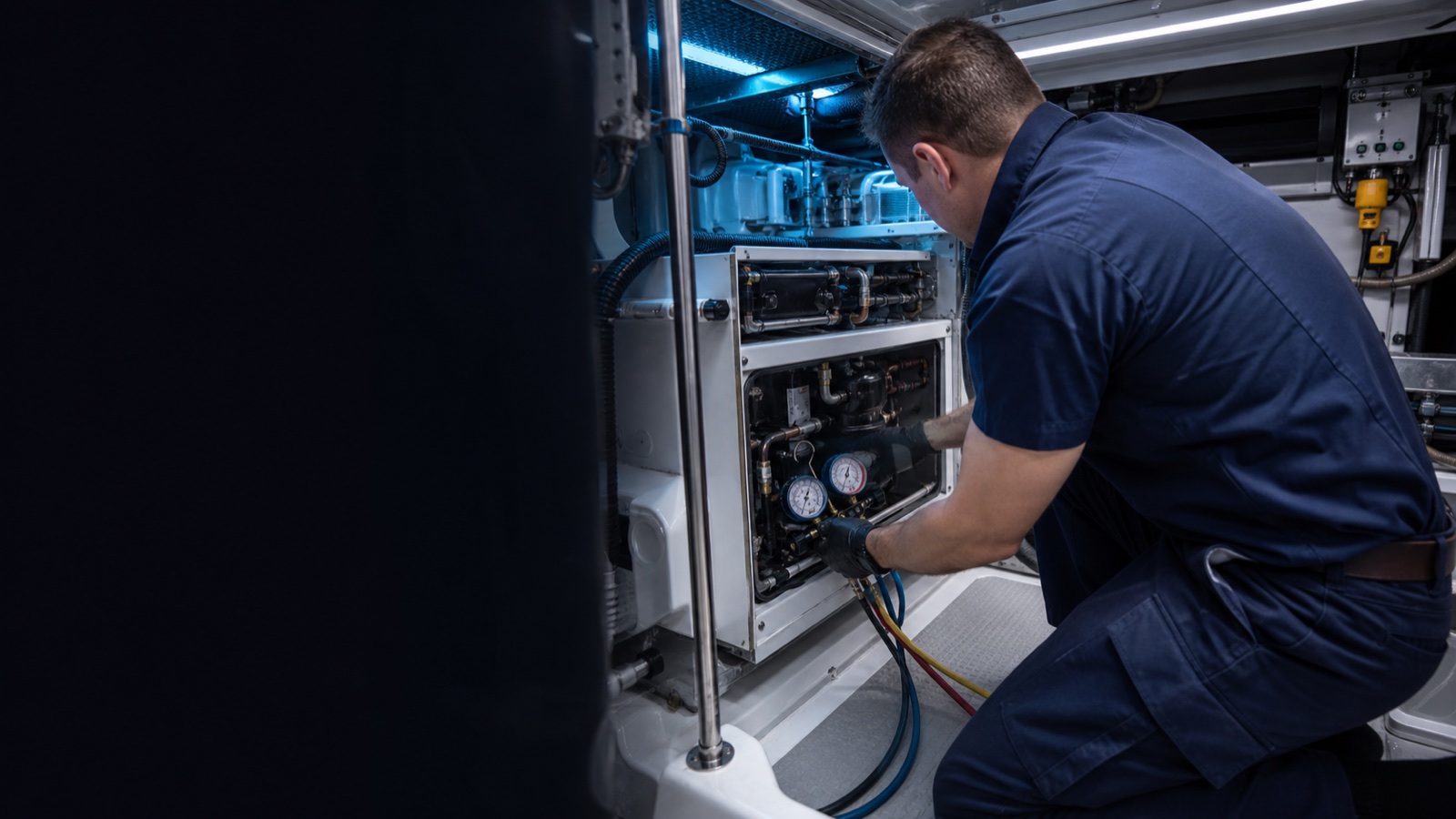
Low refrigerant caused by a leak, a failing compressor, a metering problem or degraded electrical components can also reduce capacity. Pressure, temperature and electrical measurements are needed to distinguish these conditions. Refrigerant should never be added as a guess; a leak and the reason for the loss must be addressed.
What to tell the marine air technician
Share the vessel make and model, marina or service location, equipment brand if visible, number of affected zones, fault codes, when the problem began and whether work was recently performed. A short video of the display, discharge flow or unusual sound can help prepare the visit.
If the boat is in Palm Beach, Broward, Miami-Dade, St. Lucie or a surrounding South Florida area, use the Knot Hot service request to describe the symptoms and location. You can also review the complete marine air service path before requesting a diagnosis.