
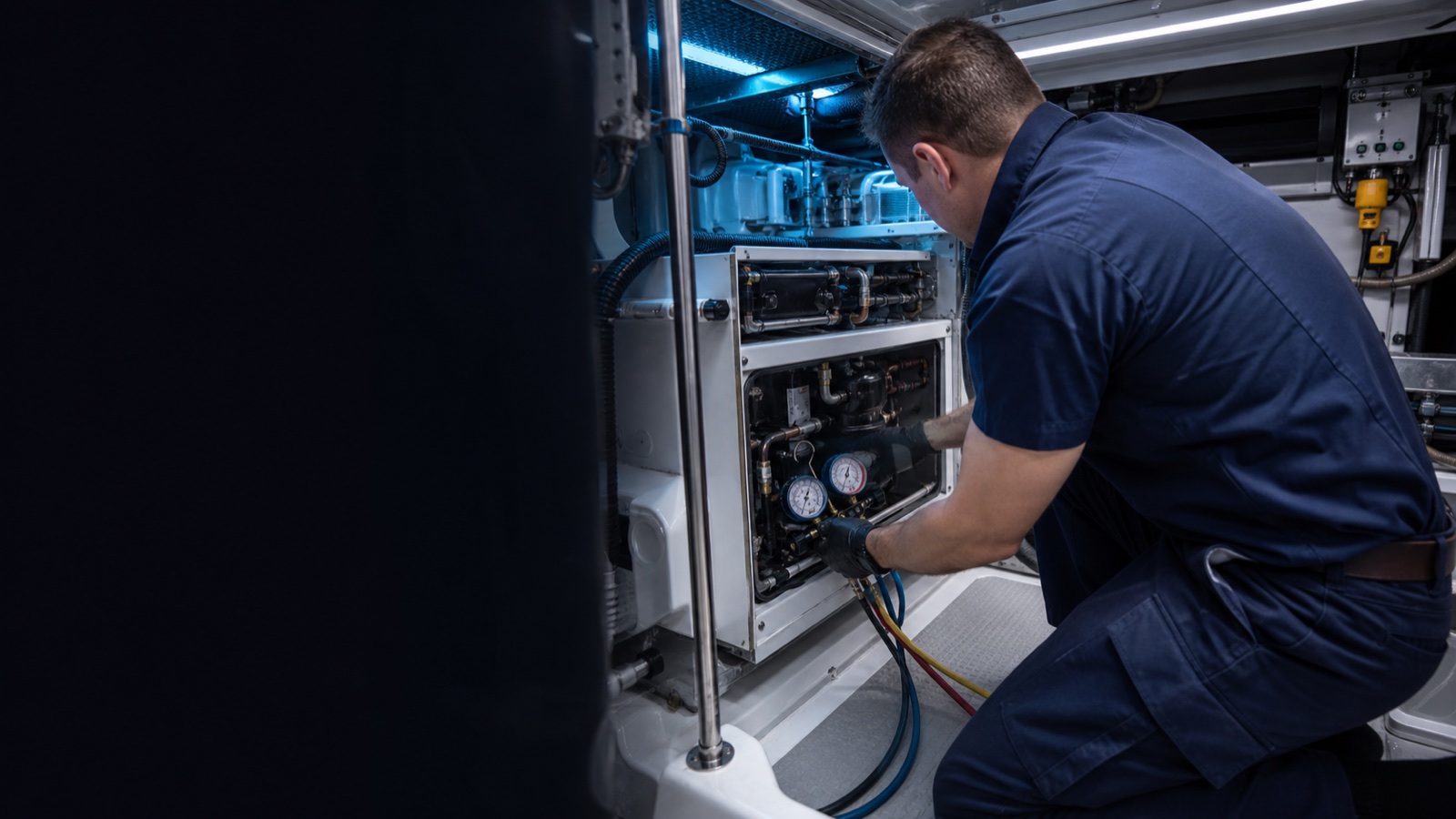
Marine air conditioning works in a demanding environment. Salt, humidity, vibration, confined equipment spaces and long periods of storage can turn a small restriction or loose connection into an uncomfortable trip. A repeatable maintenance routine makes changes easier to spot before departure.
This checklist separates simple owner observations from professional service. Always follow the equipment manufacturer's manual and the vessel's safety procedures.
Before every extended trip
- Run every zone long enough to confirm normal startup, airflow and temperature response.
- Look for current fault codes and record any code that appears.
- Confirm a steady seawater discharge with the system operating.
- Check accessible return grilles and supply vents for obstructions.
- Look for condensate leaks, standing water or new odors near equipment spaces.
- Listen for new blower, fan or compressor sounds.
A pre-trip run should happen early enough to leave time for service. Discovering a fault as guests arrive or weather changes creates pressure to accept a rushed diagnosis.
Monthly during frequent use
Air filters and return paths
Inspect accessible filters and clean or replace them according to the manufacturer's directions. Keep the return-air path open. A clean filter does not help if towels, bags or cabinetry modifications block the grille.
Seawater observations
Compare the discharge stream with what is normal for the vessel. A gradual decline can be easier to recognize when you check it consistently. Observe from a safe position; components outside the climate equipment should be handled by the appropriate marine trade.
Condensate management
Cooling creates water. Verify that accessible drain pans and drain paths are not overflowing. Persistent moisture, staining or musty odor deserves attention because a blocked drain can damage finishes and surrounding materials.
Professional seasonal inspection
A planned inspection can go beyond what is visible without opening the equipment. The exact scope depends on the system, but it may include:
- Electrical terminals, operating current and supply-voltage checks.
- Blower, coil and accessible duct inspection.
- Marine AC heat-rejection performance measurements within the climate equipment.
- Control, sensor and fault-history review.
- Condensate drain and pan inspection.
- Operating temperature and refrigeration-system measurements when symptoms justify them.
After storage or a long idle period
Inspect the space before energizing the system. Look for pest activity, corrosion, loose stored items and water intrusion around the climate equipment. Confirm that vessel power is stable, then start zones one at a time while watching the display and normal operating response.
Keep a simple service record
Record dates, fault codes, filter care, discharge-flow changes and completed repairs. Include photos of equipment labels and serial numbers. A useful record helps a technician see whether the same symptom is returning and helps an owner make a better marine AC repair-versus-replacement decision.
For planned care in South Florida, explore Knot Hot marine air maintenance and diagnostics or send the vessel location and equipment details.